Best Fish for a 30 Gallon Tank (2026): 16 Picks + Stocking Ideas
Posted by on 01/03/2024
Updated October 19, 2026
If you've allocated enough space for a 30-gallon aquarium, you have plenty of unique and vibrant fish to choose from.
Tanks of this size allow for many different stocking options, and hobbyists can choose from large groups of nano-sized fish, or larger fish, such as plecos and dwarf cichlids.
In this post, we'll recommend 16 of our favorite fish for a 30-gallon aquarium, with their adult size, group size and temperature, plus three sample stocking plans you can copy.
Quick answer: what are the best fish for a 30 gallon tank?
Build a 30-gallon tank around one centerpiece, one schooling group and one bottom dweller. Good centerpieces are a pair of kribensis, German gold rams or apistogrammas; good schooling fish are neon tetras, blue emperor tetras and cherry barbs; a bristlenose pleco handles the bottom.
Sample stock: 1 pair of kribensis, 10 blue emperor tetras and 1 bristlenose pleco.
🛒 Shop freshwater fish on Light Fish
From hobbyist breeders and small sellers across the US.



At a Glance
Sizes are typical adult sizes. Group size is the minimum we'd keep together; temperatures are the usual comfortable range.
| Fish | Adult size | How many | Temperament | Care | Temp (°F) |
|---|---|---|---|---|---|
| Queen Arabesque Pleco | 3.5–4 in | 1 | Peaceful | Moderate | 79–86 |
| Green Dragon Bristlenose Pleco | 4–5 in | 1 | Peaceful | Easy | 73–81 |
| Bumblebee Platy | 2–2.5 in | 5+ (more females) | Peaceful | Easy | 70–80 |
| Green Phantom Pleco | 5–6 in | 1 | Peaceful | Moderate | 77–84 |
| Platinum Parrot Fish | 6–8 in | 1 | Semi-aggressive | Moderate | 76–80 |
| Kribensis Cichlid | 3–4 in | Pair | Semi-aggressive | Easy | 75–81 |
| Apistogramma Agassizii | 2.5–3 in | Pair or 1 male + 2–3 females | Peaceful, territorial when breeding | Moderate | 75–84 |
| Blue Emperor Tetra | 1.5–2 in | 8+ | Peaceful | Easy | 73–81 |
| Neon Tetra | 1.5 in | 10+ | Peaceful | Easy | 72–78 |
| Gold White Cloud Mountain Minnow | 1.5 in | 8+ | Peaceful | Easy | 60–72 |
| Platinum Blue Medaka Ricefish | 1.5 in | 8+ | Peaceful | Easy | 64–78 |
| German Gold Ram | 2–3 in | Pair | Peaceful | Moderate | 80–86 |
| Apistogramma Cacatuoides | 2–3 in | 1 male + 2–3 females | Semi-aggressive | Moderate | 75–84 |
| Sparkling Gourami | 1.5 in | 6+ | Peaceful | Easy | 76–82 |
| Cherry Barb | 2 in | 6+ | Peaceful | Easy | 73–81 |
| Electric Blue Acara | 6–7 in | 1 | Semi-aggressive | Moderate | 75–82 |
Our Favorites
Whether you're interested in purchasing a large group of small fish, or a few centerpiece fish, the following list should get you started.
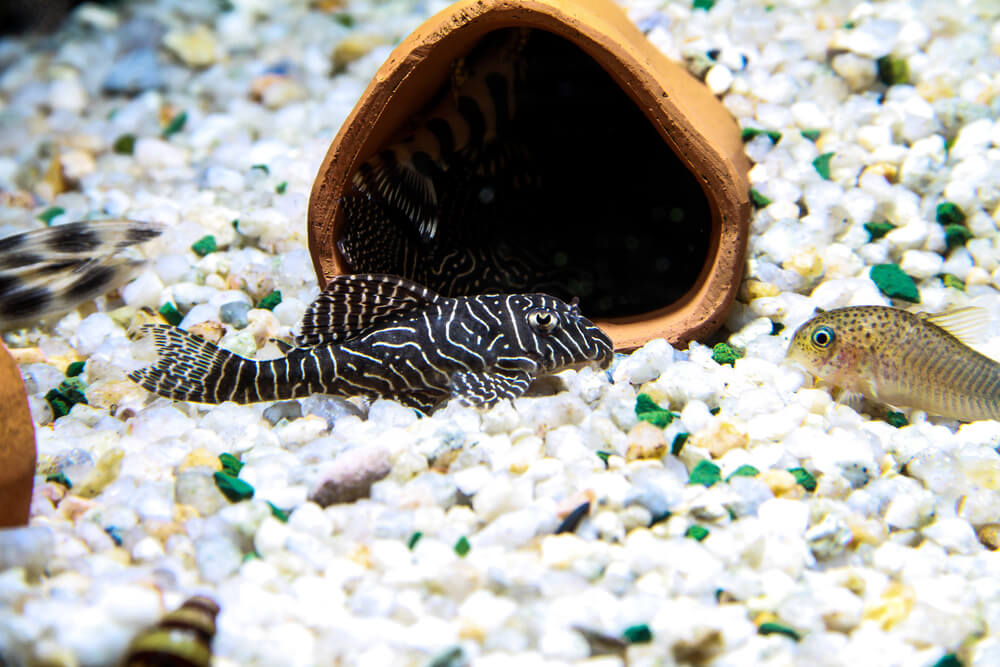
Queen Arabesque Pleco
Size 3.5–4 in · Keep 1 · 79–86°F · Peaceful · Moderate care
The Queen Arabesque Pleco is one of the more expensive fish on our list, and for good reason. This small pleco sports a unique zebra-like pattern and stays under 4 inches, so a single one fits a 30-gallon tank comfortably. It likes warm, well-oxygenated water and caves to hide in. If you're interested, we've built a complete care guide for the species.
Green Dragon Bristlenose Pleco
Size 4–5 in · Keep 1 · 73–81°F · Peaceful · Easy care
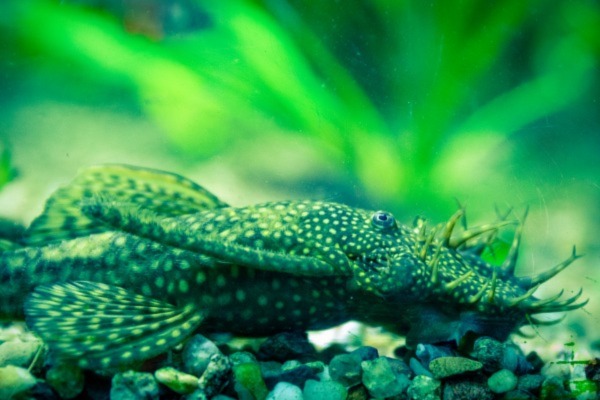
Next up on our list is yet another Pleco, the Green Dragon Bristlenose. There are two variants seen in the hobby, a short fin version and a long fin. We cover the differences in more detail in our care guide: Green Dragon Bristlenose Pleco: Care, Size, Lifespan & More, but the gist of it is that the long fin version is significantly harder to find. Hobbyists will appreciate either option, as the coloration of this fish is quite beautiful.
Bumblebee Platy
Size 2–2.5 in · Group of 5+, more females than males · 70–80°F · Peaceful · Easy care
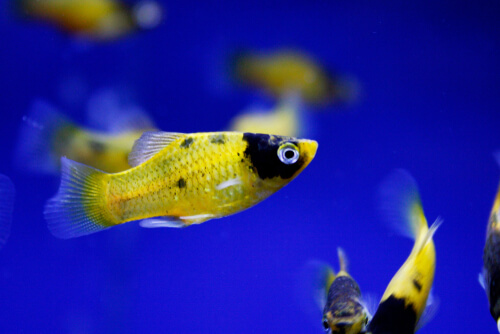
Platies are relatively common in the hobby, as these fish have been crossbred to produce a wide variety of different colors. One such example is the Bumblebee Platy, a small fish with a bee-like coloration. Hobbyists can keep a group of these in a 30-gallon tank, but keep in mind that platies are live-bearing fish, and will easily breed in captivity. Keep more females than males so no single female is chased constantly.
Green Phantom Pleco
Size 5–6 in · Keep 1 · 77–84°F · Peaceful · Moderate care
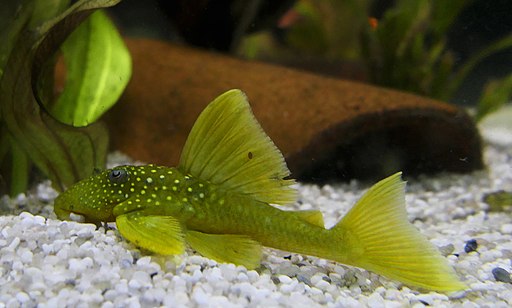
Not only does the Green Phantom Pleco have one of the coolest names in the hobby, but it also has an appearance to match. Green Phantom Pleco's sport a lemon-lime coloration, and hail from the same region of the world as some of the hobby's most popular aquatic plant species: Cabomba, Alternanthera, Bacopa, Salivina, and the Green Phantom all can be found in the wild in South America's Rio Orinoco. Hobbyists will need to provide plenty of wood for this fish to rasp on and can learn a bit more about the species in our Green Phantom Pleco Care Guide.
Platinum Parrot Fish
Size 6–8 in · Keep 1 · 76–80°F · Semi-aggressive · Moderate care
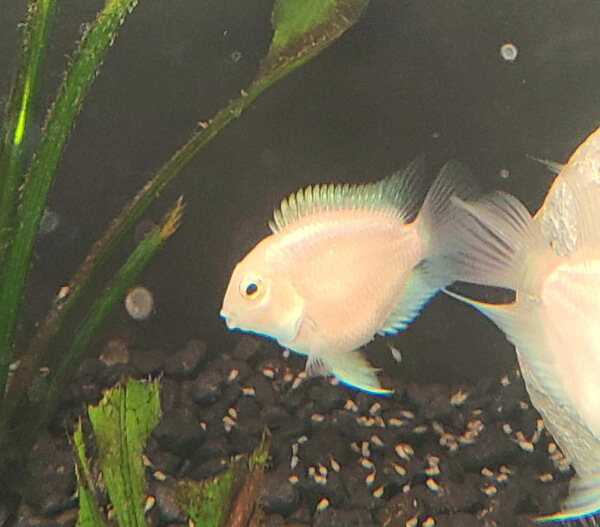
Arguably the most controversial fish on our list is the Platinum Parrot Fish. This fish has been crossbred to develop an odd appearance. Hobbyists appreciate the fish's upturned mouth, which gives the fish a perpetual smile. Unfortunately, crossbreeding has resulted in a low life expectancy for the fish, but we'll leave it up to you to decide whether or not the fish is right for you. Parrots grow to 6–8 inches, so a 30-gallon tank is the minimum for a single fish; keep a group only in a larger tank. If you decide on a platinum parrot, we have some tips on how you can give your pet the best life possible in our Platinum Parrot Fish Care Guide.
Kribensis Cichlid
Size 3–4 in · Pair · 75–81°F · Semi-aggressive · Easy care
The Kribensis Cichlid is a classic fish, and has also landed on our list of best fish for a 20-gallon aquarium. The species has been recommended to hobbyists new to cichlid-keeping for decades, and for good reason. The fish is hardy, and not nearly as aggressive as many of the other cichlids kept by hobbyists, such as the Cuban Cichlid. In a 30-gallon tank, keep a single pair and give them a cave; they'll claim the bottom third of the tank when they breed.
👉 Shop African Cichlids on Light Fish
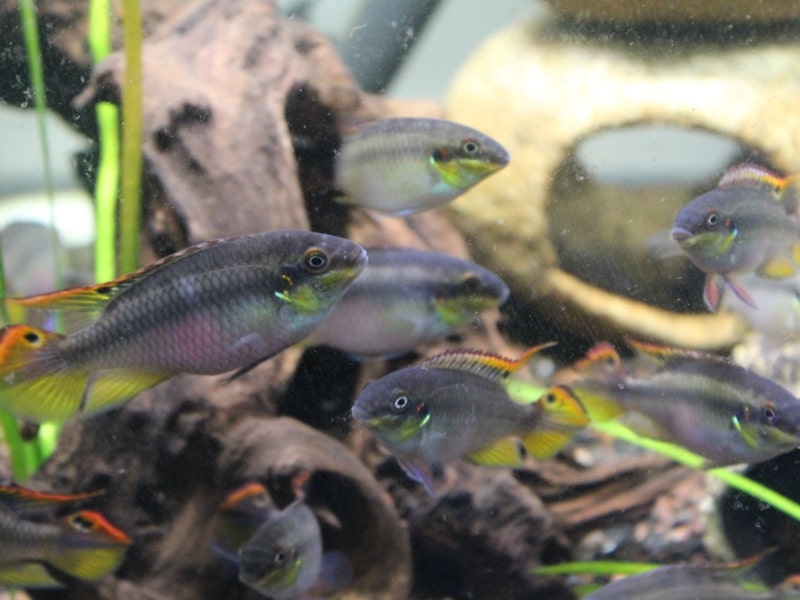
Apistogramma Agassizii
Size 2.5–3 in · Pair, or 1 male + 2–3 females · 75–84°F · Peaceful, territorial when breeding · Moderate care
Hailing from the Amazon Rainforest is the Apistogramma agassizii. This fish can be found living in slow-moving waters, and the coloration of the species can vary significantly from fish to fish. Aquarium hobbyists often pursue the "fire-red" agassizii, in demand due to its bright red coloration.
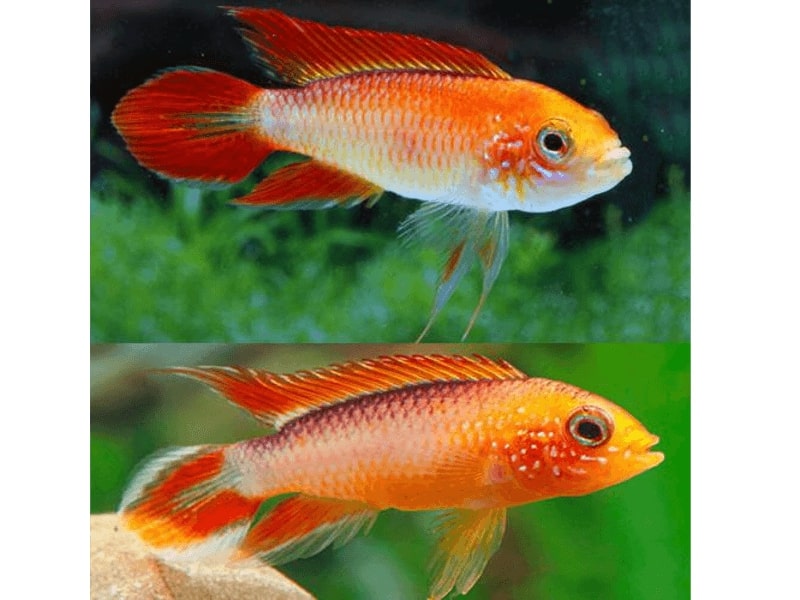
Blue Emperor Tetra
Size 1.5–2 in · Group of 8+ · 73–81°F · Peaceful · Easy care
The Blue Emperor Tetra is a line-bred color morph, descending from the more common Emperor Tetra. The fish displays a beautiful violet/blue coloration and is known for its active personality, often swimming throughout the tank in search of new food sources. Hobbyists should have no issues keeping up to 20 of these fish in a 30-gallon tank.
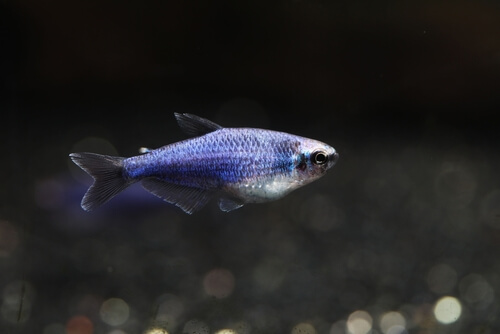
Neon Tetra
Size 1.5 in · Group of 10+ · 72–78°F · Peaceful · Easy care
Perhaps the most commonly kept fish on our list is the Neon Tetra. It's a classic aquarium fish, pursued for its bright red and blue color. The fish is hardy and easy to keep. Hobbyists will appreciate keeping a large group of these fish, which are capable of forming loose schools (technically shoals) in an at-home aquarium.
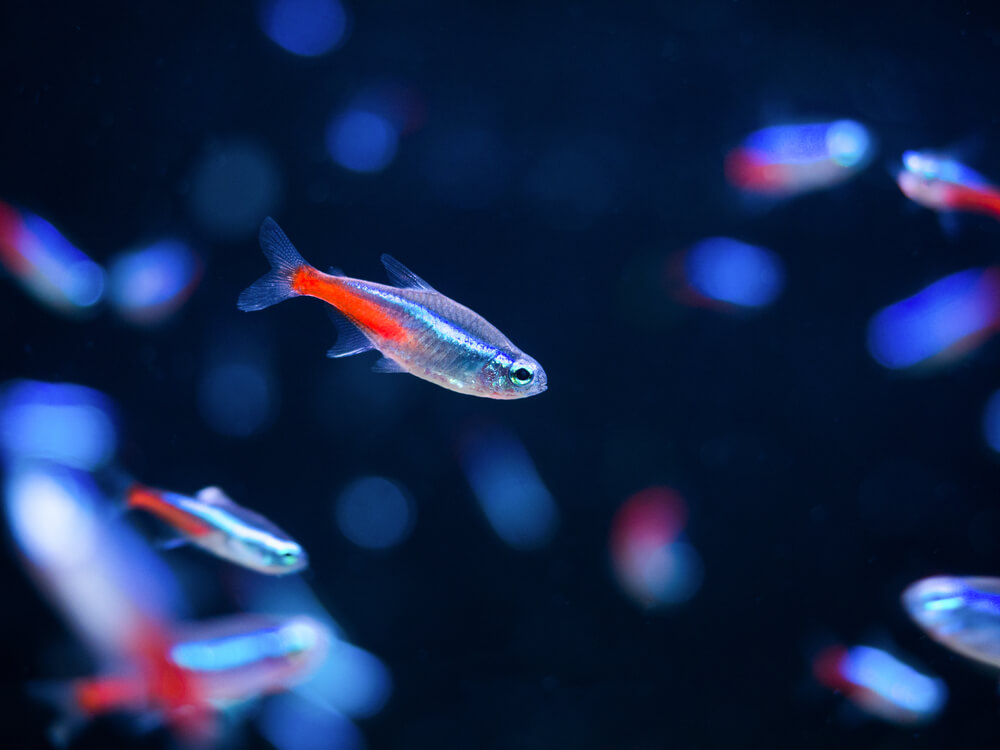
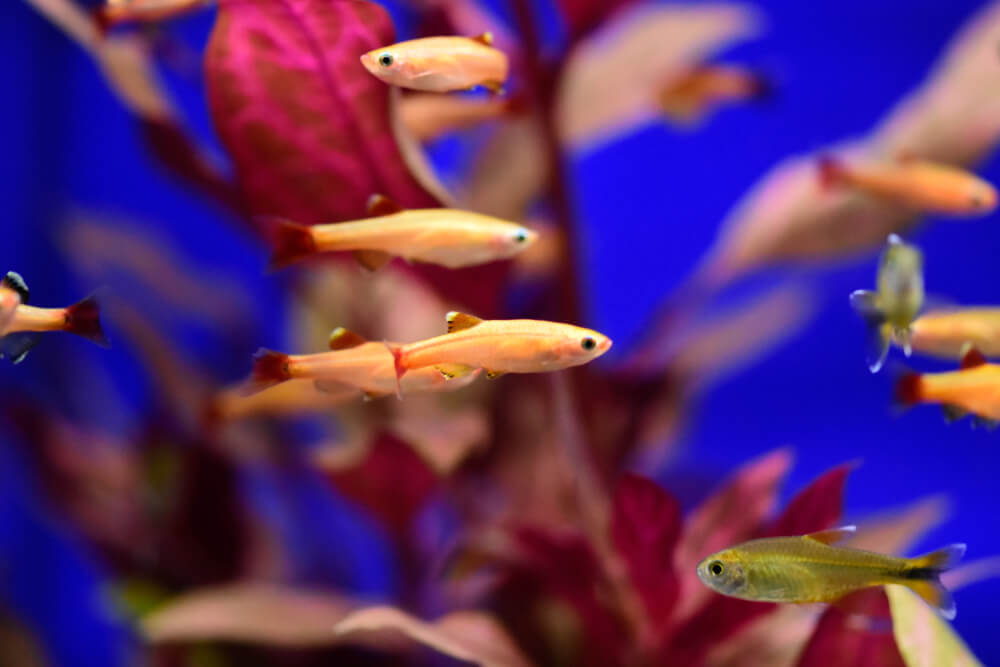
Gold White Cloud Mountain Minnow
Size 1.5 in · Group of 8+ · 60–72°F (no heater needed) · Peaceful · Easy care
Native to China is the White Cloud Mountain Minnow. The White Cloud is an active, coldwater fish, and displays a playful personality in an at-home aquarium. Less commonly seen is the Gold White Cloud Mountain Minnow which displays an orange/gold coloration compared to the all-white color seen in the more traditional white cloud. Hobbyists can keep up to 20 of these in a 30-gallon tank.
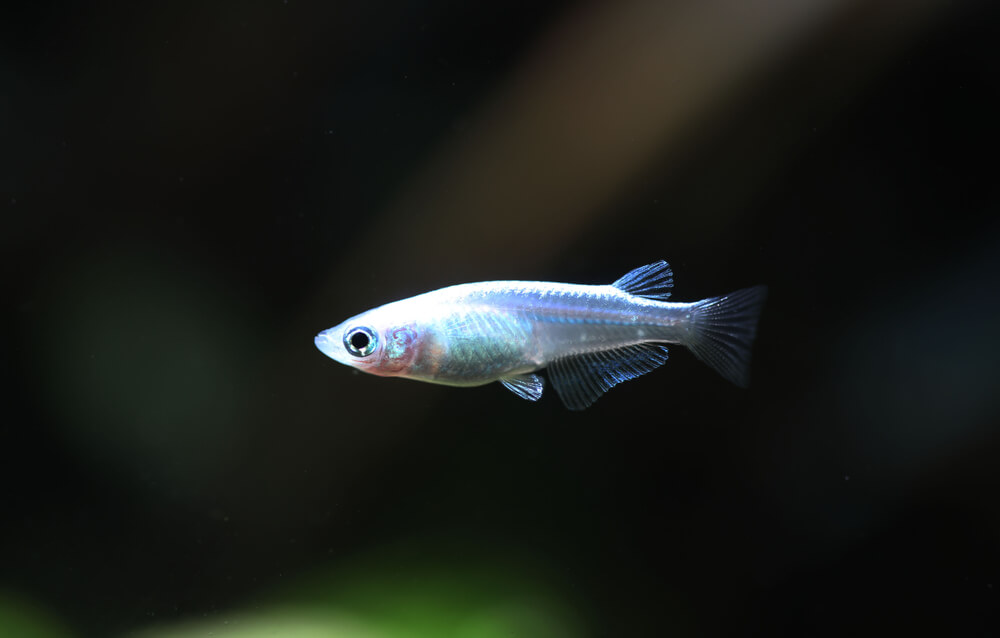
Platinum Blue Medaka Ricefish
Size 1.5 in · Group of 8+ · 64–78°F (no heater needed) · Peaceful · Easy care
Another coldwater fish is the Platinum Blue Medaka Ricefish. These fish are incredibly tiny, and adults will only grow to be about 1.5 inches in length. Native to Japan, hobbyists can keep up to 18 of them in a 30-gallon tank, but they have a relatively short life span, only averaging about 2 years in captivity.
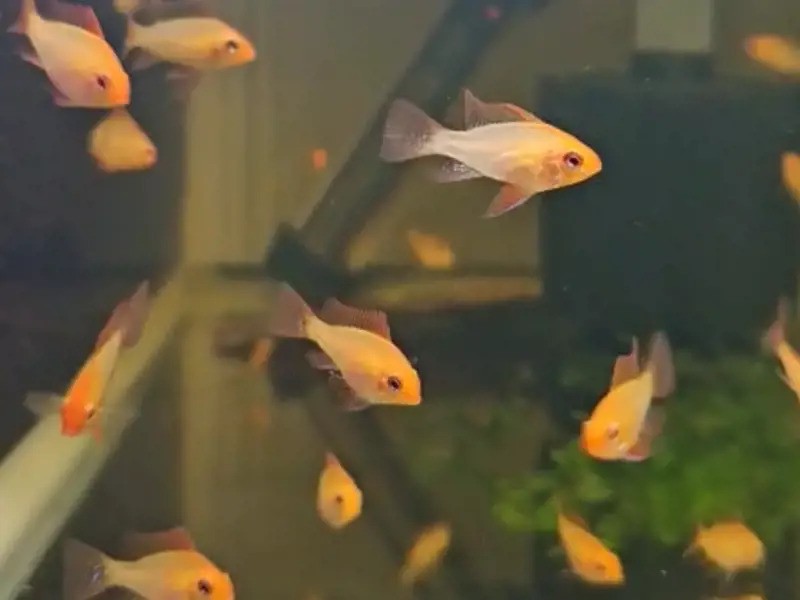
German Gold Rams
Size 2–3 in · Pair · 80–86°F · Peaceful · Moderate care
Beautiful, active, and relatively peaceful when compared to other Rams, the German Gold Ram is a great fish for a 30-gallon aquarium. These fish require a warm-watered tank, and hobbyists will be required to provide a sand-based substrate due to the fish's propensity to dig in the substrate. A single pair is the best fit for a 30-gallon tank, and they need stable, clean water, so add them once the tank is well established.
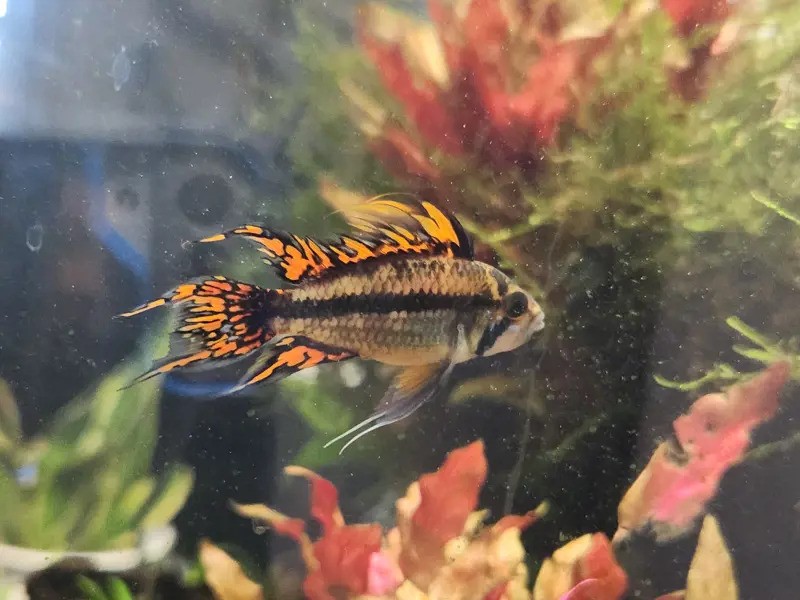
Apistogramma Cacatuoides
Size 2–3 in · 1 male + 2–3 females · 75–84°F · Semi-aggressive · Moderate care
Also known as the Cockatoo dwarf cichlid, Apistogramma Cactuiodes is named after its cockatoo-like tail and dorsal fins. Males display a brilliant display of red, orange, and yellow, and due to their temperament, hobbyists can care for these fish in a community tank setup. Due to their popularity, these fish are frequently bred, making them quite affordable. However, if you're after the best and the brightest apisto, you may need to pay a pretty penny.
👉 Shop New World Cichlids on Light Fish
Sparkling Gouramis
Size 1.5 in · Group of 6+ · 76–82°F · Peaceful · Easy care
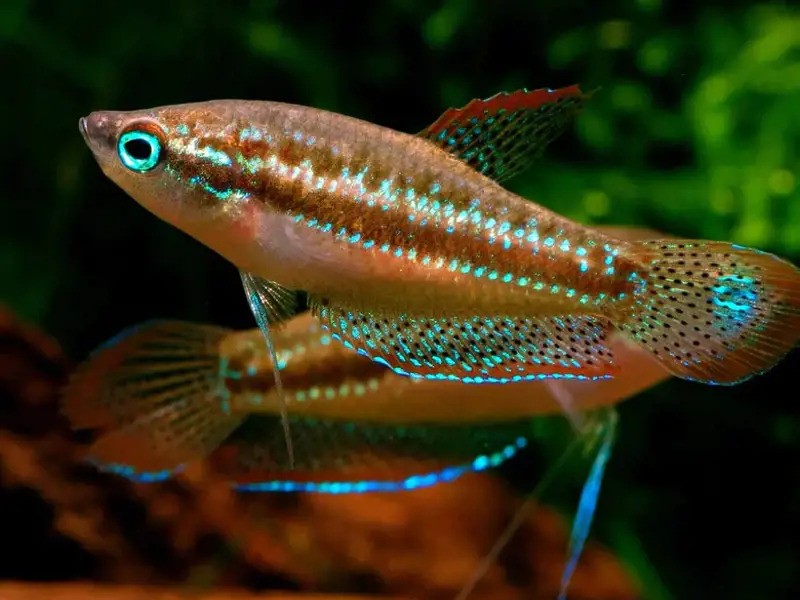
Reaching a maximum size of 1.5 inches in length, hobbyists can keep up to 12 of these fish in a 30-gallon tank. These fish are peaceful and will appreciate a large variety of aquatic plants in an at-home aquarium. Sparkling gouramis are stunning fish to keep. Native to Thailand, they make for excellent aquarium fish.
Cherry Barbs
Size 2 in · Group of 6+ · 73–81°F · Peaceful · Easy care
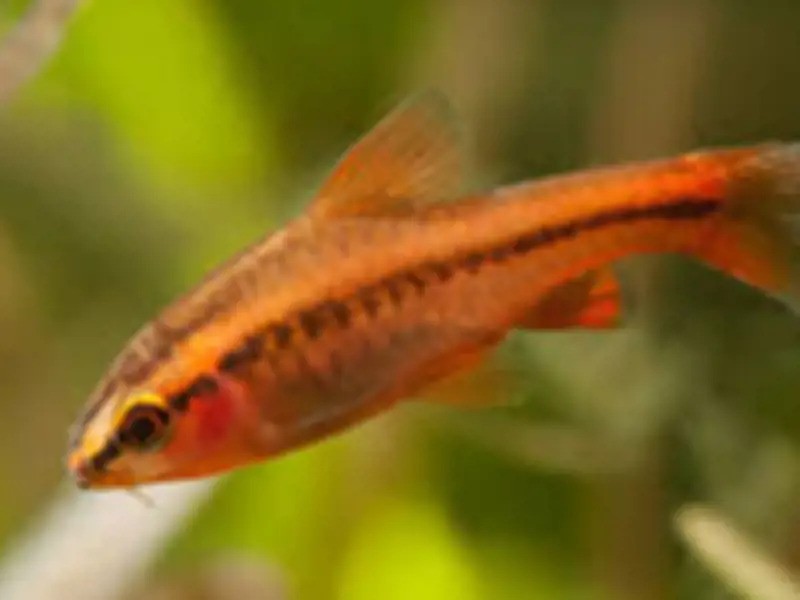
Cherry Barbs are often pursued for their bright red coloration. Hobbyists will want to keep at least 6 of them, as they do best when kept in small schools. The fish is known for its peaceful temperament but requires plenty of hiding spots and natural vegetation. Male Cherry Barbs will have a much stronger coloration than Females, and hobbyists can keep up to 10 of them in a 30-gallon.
Electric Blue Acaras
Size 6–7 in · Keep 1 · 75–82°F · Semi-aggressive · Moderate care
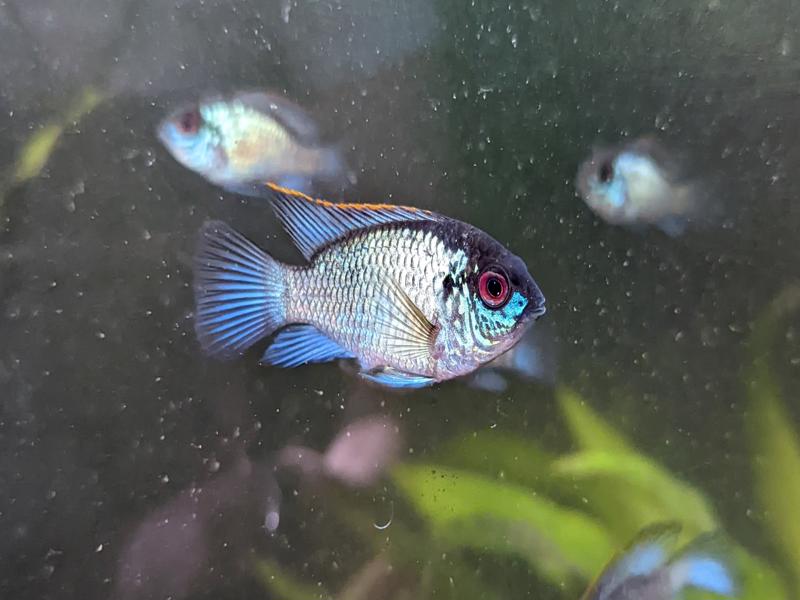
Although the Electric Blue Acara is quite large, hobbyists can keep 1 of these fish in their 30-gallon tanks. It's not surprising as to how the fish got its common name. The fish sports a bright blue coloration, similar to the Electric Blue Jack Dempsey, but not nearly as aggressive. Hobbyists should be prepared to care for this fish for quite some time, as they have a lifespan of up to 10 years. At 6–7 inches, one acara is the most a 30-gallon tank can hold; a pair needs 40 gallons or more, and tankmates should be too big to swallow.
How Many Fish Can Go in a 30 Gallon Tank?
There's no exact number, and the old "one inch of fish per gallon" rule doesn't hold up: a 6-inch acara produces far more waste than six 1-inch tetras. Count by adult size and how much waste each fish makes, not by the size of the fish you bring home.
As a practical limit, stick to fish that stay under about 6–7 inches as adults, and keep any fish that size on its own. Common plecos, oscars, most African cichlids and goldfish all outgrow a 30-gallon tank, even if they're sold small.
The shape of the tank matters too. A standard 30 gallon is about 36 × 12 × 16 inches; a 30-gallon breeder is about 36 × 18 × 12 inches. The breeder's extra floor space suits cichlids and bottom dwellers that claim territory on the substrate, while the standard tank suits schools of midwater fish.
Whatever you choose, use a filter rated for 40–60 gallons, add fish a few at a time, and plan on changing about 25% of the water each week. A typical well-stocked 30 gallon holds one centerpiece pair or single larger fish, one school of 10–15 small fish, and one bottom dweller.
30 Gallon Stocking Ideas
Three combinations that work, with temperatures that overlap:
1. Community tank with a centerpiece
- 1 pair of kribensis cichlids
- 10 blue emperor tetras
- 1 green dragon bristlenose pleco
Why it works: the kribensis hold the bottom, the emperor tetras are quick and stay in midwater out of their way, and all three are comfortable at 75–81°F.
2. Livebearer tank
- 8 bumblebee platies (2 males, 6 females), or a similar group of fancy guppies
- 8 cherry barbs
- 1 bristlenose pleco
Why it works: everything here is hardy and peaceful, a good first 30 gallon. Expect fry; heavy plants give some of them cover, or rehome the extras.
3. Small cichlid tank
- 1 pair of convict cichlids
- 1 bristlenose pleco
Why it works: convicts are tough, colorful and breed readily, and a pair has room for its own territory in a 30 gallon (a breeder is ideal). They defend their fry fiercely, so skip other small fish. For something calmer, swap the convicts for 1 male and 2–3 female Apistogramma cacatuoides plus 10 neon tetras.
👉 Shop New World Cichlids on Light Fish
Where to Purchase
You can find many of these fish on the Light Fish marketplace, where hobbyist sellers across the US ship fish they've raised themselves, covered by our live arrival guarantee. If what you're after isn't listed, we've also built an extensive list of 250+ online aquarium stores to help your search.
FAQ
What are the best fish for a 30 gallon tank?
Build a 30 gallon tank around one centerpiece, one schooling group and one bottom dweller. Good centerpieces are a pair of kribensis, German gold rams or apistogrammas; good schooling fish are neon tetras, blue emperor tetras and cherry barbs; a bristlenose pleco handles the bottom. A sample stock: 1 pair of kribensis, 10 blue emperor tetras and 1 bristlenose pleco.
What is the best centerpiece fish for a 30 gallon tank?
A pair of dwarf cichlids makes the best centerpiece: kribensis are the hardiest, German gold rams and apistogrammas are the most colorful. If you want one larger fish instead, a single electric blue acara works in a 30 gallon, though 30 gallons is the minimum for it.
Can you keep cichlids in a 30 gallon tank?
Yes, if you choose small ones. Kribensis, rams and apistogrammas are kept as a pair or a male with two or three females, and a pair of convict cichlids works on its own. Large cichlids such as oscars, jewel cichlids and most African cichlids outgrow a 30 gallon tank.
What is the biggest fish for a 30 gallon tank?
Plan on adult fish under about 6 to 7 inches, kept singly. A lone electric blue acara or blood parrot is about the upper limit. Anything that grows larger, such as common plecos, oscars or goldfish, needs a bigger tank.
How many neon tetras can go in a 30 gallon tank?
About 15 to 20 neon tetras if they are the main fish, or 10 to 12 alongside a centerpiece pair and a bottom dweller. Keep at least 10 so they feel secure and school.
Are the best fish for a 35 gallon tank different from a 30 gallon?
No, the same fish suit a 35 gallon tank. The extra five gallons give a little more room for water changes and slightly larger groups, but the footprint of the tank matters more than the extra volume.
Conclusion
That wraps up our 16 best fish for a 30-gallon tank. Pick one centerpiece, one school and one bottom dweller, check that their temperatures overlap, and you'll have a tank that looks full without being crowded. Moving up from a smaller tank? Compare our lists for a 20-gallon tank and a 10-gallon tank. Did your favorite fish miss the list? Let us know in the comments, and browse new listings on Light Fish from hobbyist sellers across the US.

Miles Harrison
With over a decade of aquarium experience, Miles can be found writing about saltwater and freshwater aquariums. When he’s not writing about fish, you can find him going for a run or building websites, such as this one!